Showing posts with label rpg game. Show all posts

Sunday, October 4, 2026

Outdoor Shooting Range Papercraft Diorama - Work in Progress

While I continue working on a few projects, an idea that started as a simple addition ended up growing and becoming practically a new papercraft model.

This is a small outdoor shooting range that I am creating completely from scratch. The original idea came up while I was working on the new version of the Ammu-Nation, as I wanted to add something to one side of the building and make the whole scene a little more interesting.

That is how I started imagining this shooting range.

Its dimensions were planned so that it can fit perfectly alongside the Ammu-Nation, but as I kept adding pieces and developing the scenery, I realized that it was becoming a model in its own right.

It is important to say that this shooting range does not exist in GTA V and is not based on any specific location from the game. I also did not try to faithfully reproduce a real shooting range. My main concern was to create a small diorama that would be visually interesting, easy to understand when assembled and, above all, fun to build and customize.

The scenery is divided into several clearly defined areas. At the front are the shooting positions, with three large wooden counters. On their tops are printed details representing firearms, ammunition, targets and other small pieces of equipment. This way I can suggest many different objects without turning the model into a collection of tiny and difficult-to-build parts.

I also created four different types of ammunition boxes, each with a different size, shape and markings. Since they are separate pieces, they can be scattered around the scenery, placed near the counters or stacked in different ways.

Just beyond the counters is the firing line, marked directly on the ground and reinforced by small barriers with warnings such as FIRING LINE and DO NOT CROSS.

From this point begins the open area separating the shooters from the targets. I deliberately kept this part relatively empty, using a dry dirt texture with small rocks, tire marks, sparse vegetation and danger warnings painted directly on the ground. This open space also helps create a greater sense of distance between the shooting positions and the targets.

At the far end are several different types of targets. There are traditional circular targets, silhouettes and small metal targets in different shapes. Some of the paper targets are attached to supports positioned over hay bales, adding a more improvised and rustic appearance to the scene.

Closing off the shooting range is a large earth-and-wood backstop. Besides providing a background for the target area, this piece visually defines the end of the scenery and helps give the whole diorama a greater sense of depth.

I also made small safety barricades, signs, sandbags, barriers and other accessories. Many of these pieces are independent, so there is no single correct way to arrange the scenery. Each modeler will be able to position them as desired, use only some of them or create a completely different arrangement from mine.

It was during this process that I realized that what was supposed to be just an addition to the Ammu-Nation had turned into a project of its own.

Although it can still fit perfectly alongside one of the sides of the store, it does not depend on the Ammu-Nation to work. It can be assembled on its own as a complete little shooting range or incorporated into practically any other diorama.

This also opens up another possibility that I find interesting: resizing the model.

Since I am not trying to represent a real location or a structure with a mandatory scale, the modeler will be able to resize it according to the project they have in mind. I can imagine it, for example, adapted for the classic Green Army Men figures of approximately 33 mm, or enlarged to accompany 3.75-inch action figures such as G.I. Joe and similar figures.

Naturally, the larger the chosen scale, the more space will be required to assemble the entire shooting range, but the relatively simple shapes of the structures and accessories should make this kind of adaptation quite easy.

The images illustrating this post were created using SketchUp 6, a 3D modeling program that I have been using for many years to develop and test my papercraft models. SketchUp makes it possible to build objects and scenes in three dimensions in a relatively simple way, apply the textures that will later be used on the paper models and, most importantly, check proportions, fittings and the arrangement of the parts before moving on to the real-world build.

In this case, I virtually assembled the entire shooting range to get a better idea of how the counters, ammunition boxes, barriers, targets and the large backstop at the far end would work together. The project is still under development, so some proportions, positions and graphic details may change before the final version.

For now, I am really enjoying the result. What started as a small idea to enrich the Ammu-Nation scenery has taken on a life of its own and become practically a new papercraft model.

Enquanto continuo trabalhando em alguns projetos, uma ideia que começou como um simples complemento acabou crescendo e se transformando praticamente em um novo modelo de papel.

Este é um pequeno campo de tiro a céu aberto que estou criando totalmente do zero. A ideia inicial surgiu enquanto eu trabalhava na nova versão da Ammu-Nation, pois queria acrescentar alguma coisa a uma das laterais do prédio e tornar o conjunto um pouco mais interessante.

Foi assim que comecei a imaginar este campo de tiro.

As dimensões foram pensadas para que ele possa ser encaixado perfeitamente ao lado da Ammu-Nation, mas, conforme fui acrescentando peças e desenvolvendo o cenário, percebi que ele estava se tornando um modelo por si só.

É importante dizer que este campo de tiro não existe em GTA V e não é baseado em nenhum lugar específico do jogo. Também não tentei reproduzir fielmente um campo de tiro real. Minha preocupação foi muito mais criar um pequeno diorama visualmente interessante, fácil de compreender quando montado e, principalmente, divertido de construir e personalizar.

O cenário é dividido em áreas bem definidas. Na parte da frente ficam as posições dos atiradores, com três grandes balcões de madeira. Sobre os tampos há detalhes impressos representando armas, munições, alvos e outros pequenos equipamentos. Dessa maneira consigo sugerir vários objetos sem transformar o modelo em uma coleção de peças minúsculas e difíceis de montar.

Também criei quatro tipos diferentes de caixas de munição, cada uma com tamanho, formato e inscrições diferentes. Como são peças independentes, elas podem ser espalhadas pelo cenário, colocadas próximas aos balcões ou empilhadas de várias maneiras.

Logo depois dos balcões fica a linha de tiro, marcada no próprio piso e reforçada por pequenas barreiras com avisos como FIRING LINE e DO NOT CROSS.

A partir desse ponto começa a área aberta que separa os atiradores dos alvos. Deixei essa parte propositalmente mais vazia, usando uma textura de terra seca com pequenas pedras, marcas de pneus, vegetação rasteira e inscrições de perigo pintadas diretamente no chão. Esse espaço vazio também ajuda a criar uma sensação maior de distância entre as posições dos atiradores e os alvos.

No fundo estão os diferentes tipos de alvos. Há alvos circulares tradicionais, silhuetas e pequenos alvos metálicos de diferentes formatos. Alguns dos alvos de papel ficam presos a suportes posicionados sobre fardos de feno, acrescentando um aspecto mais improvisado e rústico ao conjunto.

Fechando o campo de tiro há um grande anteparo feito de terra e madeira. Além de servir como fundo para a área dos alvos, essa peça delimita visualmente o cenário e ajuda bastante a dar profundidade ao diorama.

Também fiz pequenos cavaletes de segurança, placas, sacos de areia, barreiras e outros acessórios. Muitas dessas peças são independentes, portanto não existe uma única maneira correta de organizar o cenário. Cada modelista poderá posicioná-las como quiser, usar apenas algumas delas ou criar uma disposição completamente diferente da minha.

Foi justamente durante esse processo que percebi que aquilo que deveria ser apenas um complemento para a Ammu-Nation havia se transformado em um projeto próprio.

Embora continue sendo possível encaixá-lo perfeitamente em uma das laterais da loja, ele não depende dela para funcionar. Pode ser montado sozinho como um pequeno campo de tiro completo ou incorporado a praticamente qualquer outro diorama.

Isso também abre uma possibilidade que considero interessante: redimensionar o modelo.

Como não estou tentando representar um lugar real ou uma construção com uma escala obrigatória, o modelista poderá ajustar o tamanho de acordo com o projeto que tiver em mente. Posso imaginá-lo, por exemplo, adaptado para os clássicos Green Army Men de aproximadamente 33 mm ou ampliado para acompanhar figuras de ação de 3,75 polegadas, como G.I. Joe e similares.

Naturalmente, quanto maior a escala escolhida, maior será o espaço necessário para montar todo o campo de tiro, mas as formas relativamente simples das construções e dos acessórios devem facilitar bastante esse tipo de adaptação.

As imagens que ilustram este post foram criadas no SketchUp 6, programa de modelagem tridimensional que utilizo há muitos anos para desenvolver e testar meus modelos de papel. O SketchUp permite construir objetos e cenários em 3D de maneira relativamente simples, aplicar as texturas que depois serão usadas nos modelos de papel e, principalmente, visualizar proporções, encaixes e a disposição das peças antes de partir para a montagem real.

Neste caso, montei virtualmente todo o campo de tiro para ter uma ideia melhor de como os balcões, caixas de munição, barreiras, alvos e o grande anteparo ao fundo funcionariam juntos. O projeto ainda está em desenvolvimento, portanto algumas proporções, posições e detalhes gráficos poderão mudar até a versão definitiva.

Por enquanto, estou gostando bastante do resultado. O que começou como uma pequena ideia para enriquecer o cenário da Ammu-Nation acabou ganhando vida própria e se tornando praticamente um novo modelo de papel.

Papermau papercraft post divider


Papermau papercraft post divider

Monday, September 21, 2026

Dwarves, Elves, Wizards And Warriors 2.5D Papercraft Miniatures
by Eddnic

Fantasy RPG 2.5D papercraft miniatures with elves, dwarves, warriors and sorceresses by Eddnic for wargames and dioramas

I have already featured several works here at Papermau by Eddnic, designer and modeler behind the excellent Fantasy Paper Miniature Models website, and today I bring another of his collections dedicated to fans of medieval fantasy.

This set brings together a great variety of classic RPG characters: dwarves, elves, warriors, archers, sorceresses, wizards, bards, druids, clerics and many other adventurers ready to populate any gaming table or diorama.

One of the most interesting characteristics of Eddnic's models is their construction technique. In a simplified way, they can be described as 2.5D miniatures, something halfway between traditional flat paper miniatures and fully three-dimensional papercraft models.

Just take a look at the templates and the idea becomes easy to understand. Instead of dividing each character into dozens of small solid shapes with countless fold lines, the author uses relatively few pieces. The body is formed from larger, symmetrical parts, while weapons, shields, capes and accessories are added separately, creating different levels of depth.

Most of the volume comes from gently curving the pieces rather than from using lots of folds. An arm can project forward, a sword can extend away from the body, a cape can create another plane behind the figure and a shield can stand out from the torso. It is an extremely simple solution, but visually very effective, giving the characters a convincing three-dimensional appearance while using far fewer pieces than a conventional papercraft model.

Another advantage is the relatively quick assembly. Since there are few pieces and not much gluing involved, it is perfectly possible to build a small group of adventurers or even an entire army for RPG campaigns and wargames.

And the possibilities go far beyond the gaming table. These characters are perfect for fantasy RPGs, wargames, medieval dioramas, castles, taverns, dungeons, enchanted forests, villages, ruins and battlefields, and they can work very well alongside paper buildings and scenery in a compatible scale.

As with many of the models featured here at Papermau, downloading them is also simple, direct and safe. The files are made available by the author through Google Drive, without pages full of advertisements, redirects or misleading download buttons.

In my opinion, Eddnic's characters are a great example of how a clever idea can be more important than a huge number of pieces: few parts, few folds and a final result full of personality.

Eddnic 2.5D fantasy papercraft miniatures featuring elves, dwarves, warriors, wizards and adventurers for RPGs and wargames

Já publiquei aqui no Papermau vários trabalhos de Eddnic, designer e modelista responsável pelo excelente site Fantasy Paper Miniature Models, e hoje trago mais uma de suas coleções dedicadas aos fãs de fantasia medieval.

Este conjunto reúne uma grande variedade de personagens clássicos de RPG: anões, elfos, guerreiros, arqueiros, feiticeiras, magos, bardos, druidas, clérigos e vários outros aventureiros prontos para povoar qualquer mesa de jogo ou diorama.

Uma das características mais interessantes dos modelos de Eddnic é sua técnica de construção. De forma simplificada, eles podem ser definidos como miniaturas em 2.5D, uma categoria intermediária entre as tradicionais miniaturas planas em papel e os papercrafts totalmente tridimensionais.

Basta observar os próprios templates para entender a ideia. Em vez de dividir o personagem em dezenas de pequenos sólidos com inúmeras linhas de dobra, o autor utiliza relativamente poucas peças. O corpo é formado por partes amplas e simétricas, enquanto armas, escudos, capas e acessórios são adicionados separadamente, criando diferentes níveis de profundidade.

O volume surge principalmente através do curvamento das peças, e não da quantidade de dobras. Um braço avança, uma espada fica projetada para frente, uma capa cria um plano posterior e um escudo se destaca do corpo. É uma solução extremamente simples, mas visualmente muito eficiente, produzindo personagens com uma convincente aparência tridimensional usando muito menos peças do que um papercraft convencional.

Outra vantagem é a rapidez de montagem. Como há poucas peças e pouca colagem, é perfeitamente viável montar um pequeno grupo de aventureiros ou até um exército inteiro para campanhas de RPG e wargames.

E as possibilidades de uso vão muito além das mesas de jogo. Estes personagens são ideais para RPG de fantasia, wargames, dioramas medievais, castelos, tavernas, masmorras, florestas encantadas, vilas, ruínas e campos de batalha, funcionando muito bem ao lado de construções e cenários de papel na mesma escala.

Assim como acontece com muitos dos modelos divulgados aqui no Papermau, o download também é simples, direto e seguro, sendo disponibilizado pelo próprio autor através do Google Drive, sem páginas cheias de propagandas, redirecionamentos ou botões enganosos.

Na minha opinião, os personagens de Eddnic são um ótimo exemplo de como uma ideia inteligente pode valer mais do que uma enorme quantidade de peças: poucas partes, poucas dobras e um resultado final cheio de personalidade.

Eddnic fantasy 2.5D papercraft miniatures with elves, dwarves, cleric, druid, sorceress, warriors and other RPG characters
Preview of six printable template sheets from Eddnic fantasy 2.5D papercraft miniature collection for RPGs and wargames - for visualization only

Below you will find the links to download this amazing collection of 2.5D fantasy papercraft miniatures created by Eddnic.

Dwarves, Elves, Wizards And Warriors 2.5D Papercraft Miniatures - by Eddnic

Papermau papercraft post divider

And below you will find four more papercraft miniatures for RPGs, wargames and fantasy dioramas.

Four fantasy RPG and wargame papercraft related posts featuring a dragon, warriors, ancient battle miniatures and a fantasy warrior via Papermau

01: Eastern Myths And Legends Paper Models For Dioramas, RPG And Wargames - by Eddnic

02: Giants, Giants And More Giants Paper Models For Dioramas, RPG & Wargames - by Eddnic

03: Roman Legionaries vs Barbarian Warriors Printable Paper Miniatures For Wargames - by Papermau

04: Greek Hoplites vs Persian Immortals Printable Paper Miniatures For Wargames - by Papermau

Papermau papercraft post divider


Papermau papercraft post divider

Tuesday, September 8, 2026

Blaubeurer Tor In Ulm - Historical Gate Paper Model In 1/250 Scale
by Dieter Welz

Blaubeurer Tor in Ulm historical gate paper model in 1/250 scale by Dieter Welz, showing the assembled fortress entrance with towers, drawbridge, horse-drawn carriage and miniature figures

Here is another impressive architectural paper model created by German designer and model maker Dieter Welz, from the Wediul-Kartonmodelle website, formerly known to many papercraft enthusiasts as Ausschneide Bogen.

This time the subject is the Blaubeurer Tor, one of the historic structures belonging to the great Federal Fortress of Ulm (Bundesfestung Ulm), in Germany.

The model is in 1/250 scale and is certainly not a small or overly simple project. It is composed of 369 individual parts distributed over ten A4 sheets, and when completed measures approximately 28 cm wide, 23.5 cm deep and 7 cm high.

For a better result, Dieter Welz recommends printing the templates on 160 g/m² paper. The model was also designed to allow internal LED lighting, a very interesting feature for anyone planning to use it in a historical diorama or display.

The real Blaubeurer Tor was part of the enormous Bundesfestung Ulm, a system of fortifications constructed around Ulm and Neu-Ulm during the 19th century, after the Napoleonic Wars.

The gate was built between 1843 and 1855 as part of the western defenses of the city. Besides its military purpose, it had another very interesting function: branches of the Blau River flowed directly beneath the structure, and a system of integrated sluices could be used to control the water and, if necessary, flood the wet defensive moat.

An interesting coincidence makes this paper model even more timely: in 2026, the real Blaubeurer Tor became fully visible again for the first time in around sixty years, following the removal of the large road bridge that had crossed above the historic structure for decades.

A wooden drawbridge originally stood directly beside the gate building, completing the defensive system and giving the place an appearance very different from what can be seen there today.

Dieter Welz reconstructed the paper model using historical information and images available on the internet, so the model represents an approximate interpretation of how the Blaubeurer Tor and its surroundings looked in the past rather than its present-day configuration.

The project even includes small figures and horse-drawn carriages, and the author suggests using model railway scenery materials to make the grass and surrounding terrain more realistic.

As with many of Dieter Welz's architectural models already featured here on Papermau, this is much more than a simple paper building. It is a miniature reconstruction of a real piece of German history and a particularly interesting project for those who enjoy historical architecture, fortifications, model railways, dioramas and wargames.

My thanks to my friend Jo Kizinger, from the USA, for this beautiful find.

Montage showing several angles and close-up details of the Blaubeurer Tor in Ulm historical gate paper model in 1/250 scale by Dieter Welz, including the twin towers, courtyard, drawbridge, miniature soldiers and horse-drawn wagons

Eis aqui mais um impressionante modelo arquitetônico em papel criado pelo designer e modelista alemão Dieter Welz, do site Wediul-Kartonmodelle, anteriormente conhecido por muitos amantes do papercraft como Ausschneide Bogen.

Desta vez o tema é o Blaubeurer Tor, uma das construções históricas que faziam parte da gigantesca Fortaleza Federal de Ulm (Bundesfestung Ulm), na Alemanha.

O modelo está na escala 1/250 e certamente não é um projeto pequeno ou simples demais. Ele é composto por 369 peças individuais distribuídas em dez folhas A4 e, depois de montado, mede aproximadamente 28 cm de largura, 23,5 cm de profundidade e 7 cm de altura.

Para um melhor resultado, Dieter Welz recomenda imprimir os templates em papel de 160 g/m². O modelo também foi projetado para permitir iluminação interna com LEDs, um recurso muito interessante para quem pretende utilizá-lo em um diorama histórico ou simplesmente expô-lo.

O verdadeiro Blaubeurer Tor fazia parte da enorme Bundesfestung Ulm, um sistema de fortificações construído ao redor das cidades de Ulm e Neu-Ulm durante o século XIX, após as Guerras Napoleônicas.

O portão foi construído entre 1843 e 1855 como parte das defesas do acesso oeste da cidade. Além de sua função militar, ele possuía outra característica muito interessante: braços do rio Blau passavam diretamente por baixo da construção e um sistema de comportas permitia controlar a água e, em caso de necessidade, inundar o fosso defensivo.

Uma interessante coincidência torna este modelo em papel ainda mais atual: em 2026, o verdadeiro Blaubeurer Tor voltou a ficar totalmente visível pela primeira vez em cerca de sessenta anos, após a remoção da grande ponte rodoviária que durante décadas passava sobre a construção histórica.

Originalmente havia também uma ponte levadiça de madeira junto ao edifício do portão, completando o sistema defensivo e dando ao local uma aparência bastante diferente daquela que podemos ver atualmente.

Dieter Welz reconstruiu o modelo em papel utilizando informações históricas e imagens disponíveis na internet, portanto o papercraft representa uma interpretação aproximada de como o Blaubeurer Tor e seus arredores eram no passado, e não exatamente sua configuração atual.

O projeto inclui até pequenas figuras e carruagens puxadas por cavalos, e o autor sugere o uso de materiais de cenário encontrados em lojas de ferromodelismo para tornar a grama e o terreno ao redor ainda mais realistas.

Assim como acontece com muitos dos modelos arquitetônicos de Dieter Welz que já apareceram aqui no Papermau, este é muito mais do que simplesmente um prédio de papel. É uma reconstrução em miniatura de uma parte real da história alemã e um projeto especialmente interessante para quem gosta de arquitetura histórica, fortificações, ferromodelismo, dioramas e wargames.

Meus agradecimentos ao meu amigo Jo Kizinger, dos EUA, por este belo achado.

Aerial view of the assembled Blaubeurer Tor in Ulm historical gate paper model in 1/250 scale by Dieter Welz, showing the twin round towers, drawbridge, defensive walls, grassy embankments, miniature soldiers and horse-drawn carriage
Preview montage of the Blaubeurer Tor in Ulm paper model templates by Dieter Welz in 1/250 scale, showing miniature pages with walls, towers, bridge, terrain, figures and horse-drawn vehicles; preview only, not intended for printing or download

Below you will find the link to download this impressive historical paper model of the Blaubeurer Tor in Ulm, carefully recreated in 1/250 scale by Dieter Welz.

Link: Blaubeurer.Tor.In.Ulm.Paper.Model.In.1/250.Scale.by.Dieter.Welz

Papermau papercraft post divider

And below, four more Dieter Welz / Ausschneide Bogen architectural papercrafts already featured here on Papermau:

Four architectural paper models by Dieter Welz and Ausschneide Bogen featured on Papermau, including historic German churches, towers, houses and detailed old town buildings

01:
Chapel Of Saint Leonard Paper Model In Germany - 1/160 Scale - by Ausschneide Bogen

02: Lindauer Tower In Wangen - A Medieval German Tower Paper Model - by Ausschneide Bogen

03: Ulm Fishing District On The Banks Of The Danube Paper Model - by Ausschneide Bogen

04: The Weavers House In Wangen Paper Model - by Ausschneide Bogen

Papermau papercraft post divider


Papermau papercraft post divider

Sunday, September 6, 2026

Ancient Japanese Pit Dwellings In Paper - A Traditional Model
And A Pop-Up Version - by Suita City Museum

Ancient Japanese Yayoi period pit dwelling pop-up papercraft model by Yasuhide Nishimoto for the Suita City Museum, built and photographed by Fukuhikoh

The Suita City Museum, in Osaka, Japan, offers two very interesting free papercrafts based on the same subject: an ancient Japanese pit dwelling. What makes this pair especially nice is that they approach the little building in completely different ways. One is a conventional three-dimensional papercraft, while the other was designed as a pop-up model that rises when the base is opened, almost like the buildings in an old pop-up book.

The conventional version is Suita City Museum Papercraft No.1, created in 2007. It uses only two A4 sheets and follows the familiar cut, fold and glue construction used in most architectural paper models. The second one is No.13, created in 2009 and representing a pit dwelling from the Yayoi period. This more unusual version uses five A4 sheets and, when completed, can be folded flat and opened to reveal the house standing in three dimensions.

Both models are part of the educational papercraft collection offered free of charge by the Suita City Museum. The collection was created by Yasuhide Nishimoto, who began designing these paper models around 2007. His idea was to use simple paper constructions to make archaeological objects, traditional buildings and other pieces of Japanese history easier to understand while actually building them.

The real buildings represented here are usually known in English as pit dwellings or pit houses. The name can be a little confusing at first, because the house does not look as if it is underground. In reality, the ground was excavated to create a shallow pit and the floor of the dwelling was placed below the surrounding ground level. Wooden posts supported the structure and a large roof of vegetation or other natural materials covered the living space.

Buildings of this type were used in Japan for a very long time. The pop-up model is specifically identified with the Yayoi period, generally dated from around 300 BC to AD 300. These houses were simple, practical structures used by communities whose everyday life included farming, food storage, crafts and other activities that gradually changed Japanese society during those centuries.

The two papercrafts are also interesting to compare after assembly. The 2007 version works more like a small traditional architectural model and is probably the better choice for a permanent display or a diorama. The 2009 version is more of an exercise in paper engineering: opening the base and seeing the house rise into shape is part of the model itself. It is a clever way of presenting the same type of building while using paper in a completely different way.

Although these models were created mainly as educational projects and are very suitable for school work, they can also be useful for modelers. The conventional version in particular could make a nice addition to an archaeological diorama, a small historical display or even a tabletop or wargame scene set in ancient Japan, provided that the period and scale are suitable for the project.

The photos illustrating this post show both models carefully assembled by Fukuhikoh, from the Japanese blog Haniwa Wonderland. His blog is well worth a visit because he has also built several other papercrafts from the Suita City Museum collection.

Since all the free papercrafts from the Suita City Museum are gathered on the same page, to avoid any confusion you will find below the direct PDF links for these two particular pit dwellings, followed by the main Suita papercraft page and the Haniwa Wonderland post where you can see these and other models carefully assembled by Fukuhikoh.

Ancient Japanese pit dwelling conventional papercraft model by Yasuhide Nishimoto for the Suita City Museum, built and photographed by Fukuhikoh
Close-up detail of the ancient Japanese pit dwelling conventional papercraft model by Yasuhide Nishimoto for the Suita City Museum, built and photographed by Fukuhikoh

O Museu da Cidade de Suita, em Osaka, no Japão, oferece dois papercrafts gratuitos muito interessantes baseados no mesmo tema: uma antiga habitação semienterrada japonesa. O que torna essa dupla especialmente interessante é que cada modelo aborda a pequena construção de uma maneira completamente diferente. Um deles é um papercraft tridimensional convencional, enquanto o outro foi criado como um modelo pop-up, que se ergue quando a base é aberta, quase como as construções daqueles antigos livros com figuras que saltam das páginas.

A versão convencional é o papercraft No.1 do Museu da Cidade de Suita, criado em 2007. Ele ocupa apenas duas folhas A4 e utiliza o conhecido sistema de cortar, dobrar e colar usado na maioria dos modelos arquitetônicos de papel. O segundo é o No.13, criado em 2009 e representando uma habitação do período Yayoi. Esta versão mais incomum ocupa cinco folhas A4 e, depois de pronta, pode ser fechada quase plana e aberta novamente, fazendo a casinha se erguer em três dimensões.

Os dois modelos fazem parte da coleção educativa de papercrafts oferecida gratuitamente pelo Museu da Cidade de Suita. A coleção foi criada por Yasuhide Nishimoto, que começou a desenvolver esses modelos de papel por volta de 2007. A ideia era usar construções simples de papel para ajudar as pessoas a entender melhor objetos arqueológicos, construções tradicionais e outros elementos da história japonesa enquanto montavam os modelos.

As construções reais representadas aqui são geralmente chamadas em inglês de pit dwellings ou pit houses. O nome pode causar certa confusão no começo, porque olhando de fora a casa não parece estar debaixo da terra. Na verdade, o terreno era escavado para formar uma área rebaixada e o piso da habitação ficava abaixo do nível do solo ao redor. Postes de madeira sustentavam a estrutura e uma grande cobertura feita com vegetação e outros materiais naturais protegia o espaço interno.

Esse tipo de habitação foi usado no Japão durante um período muito longo. O modelo pop-up é identificado especificamente com o período Yayoi, geralmente situado entre aproximadamente 300 a.C. e 300 d.C. Eram construções simples e práticas usadas por comunidades cuja vida cotidiana incluía agricultura, armazenamento de alimentos, trabalhos manuais e outras atividades que foram transformando a sociedade japonesa ao longo daqueles séculos.

Os dois papercrafts também são interessantes quando comparados depois de montados. A versão de 2007 funciona mais como uma pequena maquete arquitetônica tradicional e provavelmente é a melhor escolha para ficar exposta ou fazer parte de um diorama. Já a versão de 2009 é também um pequeno exercício de engenharia de papel: abrir a base e ver a casa se levantar faz parte da graça do próprio modelo. É uma maneira inteligente de representar a mesma construção usando o papel de uma forma completamente diferente.

Embora esses modelos tenham sido criados principalmente com finalidade educativa e sejam muito adequados para trabalhos escolares, eles também podem interessar aos modelistas. A versão convencional, principalmente, pode ficar muito bem em um pequeno diorama arqueológico, em uma cena histórica ou até mesmo em um cenário de jogo ou wargame ambientado no Japão antigo, desde que o período e a escala sejam compatíveis com o projeto.

As fotos que ilustram este post mostram os dois modelos cuidadosamente montados por Fukuhikoh, do blog japonês Haniwa Wonderland. Vale a pena visitar o blog dele, pois Fukuhikoh também montou vários outros papercrafts da coleção do Museu da Cidade de Suita.

Como todos os papercrafts gratuitos do Museu da Cidade de Suita ficam reunidos em uma única página, para evitar confusões deixarei logo abaixo os links diretos para os PDFs dessas duas versões da habitação, seguidos pelo link da página principal de papercrafts de Suita e pelo link para o Haniwa Wonderland, onde você poderá ver estes e outros modelos da série cuidadosamente montados por Fukuhikoh.

Ancient Japanese Yayoi period pit dwelling pop-up papercraft shown closed like a book, designed by Yasuhide Nishimoto for the Suita City Museum and photographed by Fukuhikoh
Printable template sheets for the ancient Japanese Yayoi period pit dwelling pop-up papercraft No. 13 by Yasuhide Nishimoto and the Suita City Museum

Below you will find the direct download links for both Pit Dwelling papercrafts, the complete Suita City Museum papercraft collection, and Fukuhikoh's Haniwa Wonderland page with these and other carefully assembled models:

Ancient Japanese Pit Dwelling Pop-Up Papercraft - Direct PDF Download - by Suita City Museum

Ancient Japanese Pit Dwelling Conventional Papercraft - Direct PDF Download - by Suita City Museum

Complete Free Papercraft Collection - Ancient Buildings, Archaeology And More - by Suita City Museum

See The Pit Dwellings And Other Suita Papercrafts Built by Fukuhikoh - Haniwa Wonderland

Papermau papercraft post divider

01: Nikko Toshogu Shrine In Japan - A Miniature Paper Model - by K.Yoshinaka & STpers

02: Traditional Japanese Tea House Diorama Papercraft - by Papermau

03: Japanese House Miniature Paper Model In 1/100 Scale - by Solid Mokei

04: Ten Architectural Papercrafts From Handa City In Japan - by Handa Technical High School

Papermau papercraft post divider


Papermau papercraft post divider

Sunday, August 30, 2026

A Fantasy Treehouse Papercraft For Dioramas, RPGs And Wargames
by R-N-W & RPG Toons

Treehouse Papercraft by RPG Toons showing a colorful hand-drawn fantasy tree house with wooden platform, long staircase, detailed tree trunk and surrounding foliage for RPGs, wargames and dioramas

Here is a very nice Treehouse Papercraft created by Rose, from R-N-W & RPG Toons, a charming little paper model that should be especially interesting for RPG players, wargamers and anyone who enjoys building miniature fantasy or woodland dioramas.

The model represents a rustic wooden treehouse built around a large tree, with small platforms, wooden walls, roofs and a suspended bridge connecting different parts of the structure. The hand-drawn textures and slightly whimsical design give the whole model a pleasant handmade appearance, something that works particularly well with this kind of fantasy scenery.

Although it is presented as a treehouse, the model can easily become part of many different settings. It could be used as a small outpost hidden in a forest, a home for elves or other woodland inhabitants, a lookout post, a refuge for adventurers or simply an unusual building in a fantasy village. With a little imagination, several copies could even be combined to create a small settlement among the trees.

For RPG and tabletop gaming, this kind of model is also useful because it adds some vertical variety to the scenery. Instead of having all the buildings and characters at ground level, the platforms and bridge create different heights and give the scene a more interesting appearance. Of course, it can also simply be built as a small standalone display model.

An interesting detail about this papercraft is how the original idea came about. The creators asked their followers for suggestions, and the winning concept involved houses connected among the treetops. That idea eventually inspired this printable treehouse, which was then made available as a free download.

The papercraft is provided as a PDF file, and the creator indicates that it should be printed at 100% scale. The download is available directly from the original rpgtoons Patreon post.

As with many paper models of this type, there is also plenty of room for personal touches. A builder could add vegetation around the base, small branches, moss, miniature figures, barrels, crates, signs or other accessories. A simple cardboard or foam board base with some grass and stones would already turn it into a complete little diorama.

This is one of those models that does not need to be overly complicated to be interesting. The unusual subject, the hand-drawn textures and the possibility of using it in many different scenes give this Treehouse Papercraft a lot of character.

A very nice little project for a quiet afternoon of paper modeling, and a useful addition to fantasy, RPG and wargame scenery.

Treehouse Papercraft by RPG Toons showing a hand-drawn fantasy tree house with wooden platform, long suspended walkway, exposed roots and surrounding trees for RPGs, wargames and dioramas

Aqui está um belíssimo papercraft de uma casa na árvore criado por Rose, do R-N-W & RPG Toons, um pequeno e charmoso modelo de papel que deve agradar especialmente aos jogadores de RPG, wargamers e a todos que gostam de montar dioramas em miniatura com temas de fantasia ou floresta.

O modelo representa uma rústica casa de madeira construída ao redor de uma grande árvore, com pequenas plataformas, paredes de madeira, telhados e uma ponte suspensa ligando diferentes partes da estrutura. As texturas desenhadas à mão e o visual levemente fantasioso dão ao conjunto uma aparência artesanal muito agradável, que combina especialmente bem com esse tipo de cenário.

Embora seja apresentado como uma casa na árvore, o modelo pode facilmente fazer parte de muitos cenários diferentes. Ele pode ser usado como um pequeno posto avançado escondido na floresta, uma moradia para elfos ou outros habitantes das matas, um ponto de observação, um refúgio para aventureiros ou simplesmente como uma construção incomum em uma vila de fantasia. Com um pouco de imaginação, várias cópias poderiam até mesmo ser combinadas para formar um pequeno assentamento entre as árvores.

Para RPG e jogos de mesa, esse tipo de modelo também é interessante porque acrescenta variedade vertical ao cenário. Em vez de manter todas as construções e personagens no nível do chão, as plataformas e a ponte criam diferentes alturas e deixam a cena visualmente mais interessante. Naturalmente, ele também pode ser montado simplesmente como um pequeno modelo decorativo independente.

Um detalhe interessante sobre este papercraft é a maneira como surgiu a ideia original. Os criadores pediram sugestões aos seus seguidores, e a proposta vencedora envolvia casas conectadas entre as copas das árvores. Essa ideia acabou inspirando esta casa na árvore imprimível, que depois foi disponibilizada gratuitamente.

O papercraft é fornecido em arquivo PDF, e a criadora indica que ele deve ser impresso em escala de 100%. O download está disponível diretamente no post original do rpgtoons no Patreon.

Como acontece com muitos modelos de papel desse tipo, também há bastante espaço para personalização. É possível acrescentar vegetação ao redor da base, pequenos galhos, musgo, miniaturas, barris, caixas, placas ou outros acessórios. Uma base simples de papelão ou foam board com um pouco de grama e pedras já seria suficiente para transformar o modelo em um pequeno diorama completo.

Este é um daqueles modelos que não precisam ser excessivamente complicados para serem interessantes. O tema incomum, as texturas desenhadas à mão e a possibilidade de utilizá-lo em muitos tipos diferentes de cenário dão bastante personalidade a este Treehouse Papercraft.

Um pequeno e agradável projeto para uma tarde tranquila de modelismo em papel e uma ótima adição para cenários de fantasia, RPG e wargames.

Miniature templates of the Treehouse Papercraft by RPG Toons, showing the tree trunk, branches, wooden platform, hut roof, walls and bridge pieces

Below you will find the link to download the complete Treehouse Papercraft templates:

A Fantasy Treehouse Papercraft For Dioramas, RPGs And Wargames - by R-N-W & RpgToons

Papermau papercraft post divider

Below you will find four more free papercrafts featuring tree houses, medieval buildings and fantasy-style architecture, perfect for dioramas, RPGs and wargames.

Four free fantasy and medieval papercrafts for wargames, RPGs and miniature dioramas, including tree houses and tabletop buildings via Papermau

01:
A Cute Three-Story Tree House Papercraft For Kids - by Rob Ives


Saturday, August 29, 2026

Cyber City Modular Sci-Fi Papercraft For Dioramas And Wargames
by Black Magic Craft

Cyber City modular sci-fi papercraft terrain with multi-level industrial buildings, walkways and miniatures for dioramas and wargames by Black Magic Craft

Cyber City is a very interesting set of printable scenery created by Black Magic Craft for building modular cyberpunk and science-fiction environments, especially designed for tabletop wargames, RPGs, skirmish games and miniature photography.

Rather than being a conventional papercraft made of complete pieces with folding and gluing tabs, Cyber City uses a different and very practical construction system. Most of the printable parts consist of flat walls, roofs, floors and decorative panels intended to be glued onto a stronger material, such as cardboard, cardstock, recycled packaging board or even thin sheets of wood.

This construction method makes a lot of sense considering the main purpose of the set. Wargame scenery is constantly handled, moved around the table, rearranged to create different layouts and stored away after each game, so the structures need to be considerably stronger than an ordinary display papercraft.

The printable sheets include a large variety of industrial and futuristic surfaces and details, such as weathered concrete and metal walls, rusty grilles, ventilation systems, electrical boxes, pipes, doors, graffiti, warning stripes and rooftop equipment, all combining to create a convincing worn industrial and cyberpunk atmosphere.

The modular nature of Cyber City is one of its strongest features. Buildings can be created at different heights, stacked, connected by walkways and arranged in many different ways. With the same collection of pieces you can build a compact industrial complex, several separate city blocks or a much larger urban battlefield, depending on the available space and the number of modules you decide to make.

The photos on this post show one of the possible configurations using Cyber City together with miniatures and give a very good idea of how versatile this type of scenery can be for tabletop games.

Black Magic Craft also published a video showing the construction of the scenery, which is especially useful for understanding how the printable textures and panels are transformed into strong three-dimensional terrain pieces. The complete assembly video by Black Magic Craft can be watched a little further below in this post.

Cyber City is completely free to download from the Black Magic Craft website. There is, however, one small detail worth mentioning so that nobody is surprised by the download process. Although the model is listed at US$0.00, you need to provide a valid email address and create a free account on the website before downloading the files.

No banking or credit card information is required. I went through the entire process myself and downloaded the files before preparing this post. There were no charges, hidden subscriptions or tricks involved.

If you enjoy building scenery for science-fiction miniatures, cyberpunk dioramas or tabletop games, Cyber City is a particularly useful project because, instead of providing only one finished building, it gives you a collection of modular elements that can be combined and rearranged to create a different city every time.

Cyber City modular sci-fi papercraft wargame terrain with stacked industrial buildings, connecting walkways and painted miniatures by Black Magic Craft

Cyber City é um conjunto muito interessante de cenários imprimíveis criado pelo Black Magic Craft para a construção de ambientes modulares de ficção científica e estilo cyberpunk, pensado especialmente para wargames de mesa, RPGs, jogos de escaramuça e fotografia de miniaturas.

Em vez de ser um papercraft convencional formado por peças completas com abas para dobrar e colar, Cyber City utiliza um sistema de construção diferente e bastante prático. A maior parte das peças imprimíveis é composta por paredes, telhados, pisos e painéis decorativos planos, pensados para serem colados sobre um material mais resistente, como papelão, papel cartão, papelão reaproveitado de caixas de embalagens ou até mesmo chapas finas de madeira.

Esse método de construção faz bastante sentido quando levamos em conta a principal finalidade do conjunto. Cenários para wargames são constantemente manuseados, movimentados sobre a mesa, reorganizados para criar novas configurações e guardados depois de cada partida, por isso precisam ser consideravelmente mais resistentes do que um papercraft comum feito apenas para exposição.

As folhas imprimíveis incluem uma grande variedade de superfícies e detalhes industriais e futuristas, como paredes de concreto e metal envelhecido, grades enferrujadas, sistemas de ventilação, caixas elétricas, tubulações, portas, grafites, faixas de advertência e equipamentos de cobertura, tudo combinando para criar uma atmosfera industrial desgastada com uma forte aparência cyberpunk.

A natureza modular do Cyber City é um de seus pontos mais interessantes. Os edifícios podem ser construídos em diferentes alturas, empilhados, ligados por passarelas e organizados de muitas maneiras diferentes. Com o mesmo conjunto de peças é possível montar um pequeno complexo industrial, vários quarteirões separados ou um cenário urbano muito maior, dependendo do espaço disponível e da quantidade de módulos que você decidir construir.

As fotos deste post mostram uma das possíveis configurações do Cyber City junto com miniaturas e dão uma ótima ideia de como esse tipo de cenário pode ser versátil durante uma partida.

O próprio Black Magic Craft também publicou um vídeo mostrando a construção do cenário, o que é especialmente útil para entender como as texturas e os painéis impressos são transformados em peças tridimensionais resistentes. O vídeo completo da montagem, publicado pelo próprio Black Magic Craft, pode ser assistido logo abaixo.

Cyber City é totalmente gratuito para download no site do Black Magic Craft. Há apenas um pequeno detalhe que vale a pena mencionar para que ninguém seja surpreendido durante o processo. Embora o modelo apareça listado por US$0.00, é necessário fornecer um endereço de e-mail válido e criar uma conta gratuita no site antes de baixar os arquivos.

Nenhuma informação bancária ou de cartão de crédito é solicitada. Eu mesmo fiz todo o processo e baixei os arquivos antes de preparar este post. Não houve cobranças, assinaturas escondidas ou qualquer tipo de truque.

Se você gosta de construir cenários para miniaturas de ficção científica, dioramas cyberpunk ou jogos de mesa, Cyber City é um projeto especialmente interessante porque, em vez de oferecer apenas um único edifício pronto, fornece uma coleção de elementos modulares que podem ser combinados e reorganizados para criar uma cidade diferente a cada montagem.


Below you will find the link to the official Black Magic Craft page where you can download the complete Cyber City modular papercraft set for free:

Cyber City Modular Sci-Fi Papercraft For Dioramas And Wargames - by Black Magic Craft

Papermau papercraft post divider

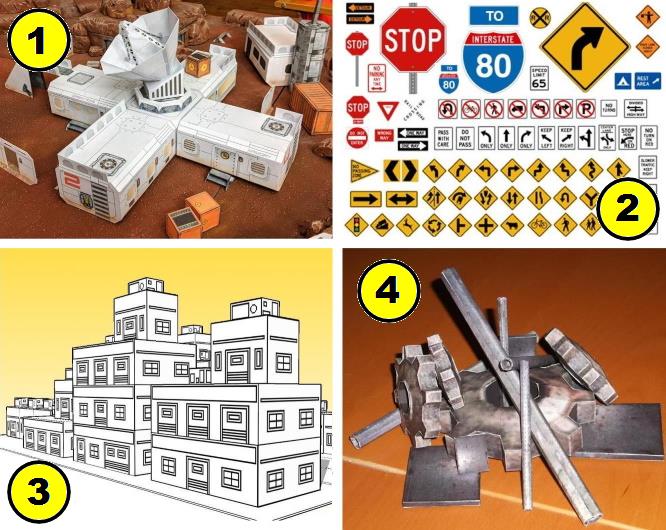
Below you will find four more papercrafts for dioramas, RPG and wargames previously featured here on the blog:


01:
Sci-Fi Colonial Outpost Paper Model For Wargames And Dioramas - by Maps & More

02: Free Vector Road Signs For Dioramas And Wargames - by Fuzzimo

03: Some Easy-To-Build Industrial Buildings For Dioramas And Wargames - by Papermau

04: Fallout New Vegas - Scrap Metal Paper Model For Wargames And Dioramas - by TheDutchyGuy