Showing posts with label soviet. Show all posts

Wednesday, September 16, 2026

T-72 Main Battle Tank Paper Model In 1/72 Scale - by Kamino-SS

T-72 Main Battle Tank detailed paper model in 1/72 scale by Hiroaki Haruto Kawamura from Kamino-SS

Here is another impressive paper model created by Japanese designer Hiroaki Haruto Kawamura, from Kamino-SS, an artist whose work has already appeared several times here on the blog.

This time the subject is quite different from some of his simpler models. It is a detailed paper reproduction of the famous T-72 main battle tank in 1/72 scale.

Despite its relatively small scale, this is definitely not a model for beginners. Kawamura himself rates the difficulty at four out of five stars and estimates that the complete assembly can take up to ten hours.

What makes this model even more interesting is that, despite all this detail, the complete T-72 template fits on just one sheet of paper.

The model reproduces very well the characteristic low silhouette of the T-72, with its compact rounded turret, long main gun, tracks, external fuel tanks and the group of smoke grenade launchers around the turret.

One interesting detail is that the commander and gunner hatches can also be assembled in the open position using optional parts.

Kawamura paid special attention to the final appearance of the model. Some parts do not have conventional glue tabs and need to be joined directly along their edges, while certain fold lines were deliberately kept discreet so they do not interfere with the finished appearance.

Fortunately, the Kamino-SS website provides an excellent photographic tutorial showing practically the entire assembly process, from the hull and tracks to the turret and main gun. There is also a separate diagram showing the cutting and folding lines, something particularly useful considering the complexity of the model.

The real T-72 was developed in the Soviet Union in the late 1960s and entered service in the early 1970s. It became one of the most widely produced main battle tanks of its generation and, through numerous versions and modernizations, was adopted by many countries around the world.

According to Kawamura, this model represents the T-72 in a relatively early configuration, typical of the Cold War period. Among its most recognizable features are the compact turret, the long main gun and the smoke grenade launchers installed at the front of the turret.

Hiroaki Haruto Kawamura is already an old acquaintance here on Papermau. He has been creating paper models since 2006 and his projects cover an impressive variety of subjects, ranging from small cars, mascots and everyday objects to ships, industrial machinery and much more elaborate models such as this T-72.

One thing I particularly like about his work is that the complexity seems to follow the subject rather than a fixed formula. Some Kamino-SS models can be assembled by beginners with only a few parts, while others, like this tank, were clearly designed for modelers looking for a real challenge.

For this T-72, Kawamura recommends matte printing paper approximately 0.2 mm thick. A good pair of tweezers will also be almost essential, especially when working with the smaller details of the turret.

If you enjoy military vehicles, 1/72 scale miniatures, wargames or simply want a slightly more challenging papercraft project, this little T-72 should provide several good hours of cutting, folding and gluing.

T-72 Main Battle Tank paper model in 1/72 scale by Kamino-SS showing open turret hatches, machine gun and rear details
T-72 Main Battle Tank paper model in 1/72 scale by Kamino-SS showing turret, main gun, tracks and external fuel tank details

Aqui está mais um impressionante modelo de papel criado pelo designer japonês Hiroaki Haruto Kawamura, do site Kamino-SS, um artista cujos trabalhos já apareceram várias vezes aqui no blog.

Desta vez o tema é um pouco diferente de alguns de seus modelos mais simples. Trata-se de uma detalhada reprodução em papel do famoso tanque T-72, na escala 1/72.

Apesar da escala relativamente pequena, este definitivamente não é um modelo para iniciantes. O próprio Kawamura classifica a dificuldade com quatro de cinco estrelas e estima que a montagem completa pode levar até dez horas.

O que torna este modelo ainda mais interessante é que, apesar de todos esses detalhes, o template completo do T-72 ocupa apenas uma folha de papel.

O modelo reproduz muito bem a característica silhueta baixa do T-72, com sua torre compacta e arredondada, o longo canhão principal, as esteiras, os tanques externos de combustível e o conjunto de lançadores de granadas fumígenas ao redor da torre.

Um detalhe interessante é que as escotilhas do comandante e do artilheiro também podem ser montadas abertas, utilizando peças opcionais.

Kawamura teve um cuidado especial com a aparência final do modelo. Algumas peças não possuem as tradicionais abas de colagem e precisam ser unidas diretamente pelas bordas, enquanto certas linhas de dobra foram mantidas discretas para não interferirem no acabamento.

Felizmente, no site Kamino-SS há um excelente tutorial fotográfico mostrando praticamente todo o processo de montagem, desde o casco e as esteiras até a torre e o canhão principal. Há também um diagrama separado indicando as linhas de corte e dobra, algo bastante útil considerando a complexidade do modelo.

O T-72 verdadeiro foi desenvolvido na União Soviética no final da década de 1960 e entrou em serviço no início dos anos 1970. Tornou-se um dos tanques de batalha mais produzidos de sua geração e, através de inúmeras versões e modernizações, foi adotado por diversos países ao redor do mundo.

Segundo Kawamura, este modelo representa o T-72 em uma configuração relativamente antiga, típica do período da Guerra Fria. Entre suas características mais reconhecíveis estão justamente a torre compacta, o longo canhão principal e os lançadores de granadas fumígenas instalados na parte frontal da torre.

Hiroaki Haruto Kawamura já é um velho conhecido aqui no Papermau. Ele cria modelos de papel desde 2006 e seus projetos abrangem uma variedade impressionante de temas, indo de pequenos carros, mascotes e objetos do cotidiano até embarcações, máquinas industriais e modelos bem mais elaborados, como este T-72.

Uma coisa que gosto particularmente em seus trabalhos é que a complexidade parece acompanhar o tema, em vez de seguir uma fórmula fixa. Alguns modelos do Kamino-SS podem ser montados por iniciantes com poucas peças, enquanto outros, como este tanque, foram claramente pensados para quem procura um verdadeiro desafio.

Para este T-72, Kawamura recomenda papel fosco com aproximadamente 0,2 mm de espessura. Uma boa pinça também será praticamente indispensável, principalmente na montagem dos pequenos detalhes da torre.

Para quem gosta de veículos militares, miniaturas na escala 1/72, wargames ou simplesmente procura um papercraft um pouco mais desafiador, este pequeno T-72 certamente proporcionará algumas boas horas de corte, dobra e colagem.

Um pouco mais baixo você encontra o link para baixar o T-72 e também o tutorial completo de montagem no site Kamino-SS.

T-72 Main Battle Tank 1/72 scale paper model by Kamino-SS showing detailed turret, main gun and machine gun
Preview of the T-72 Main Battle Tank 1/72 scale papercraft template by Kamino-SS for visualization only, not for printing or download

Below you will find the link to download the T-72 paper model and also the complete assembly tutorial at the Kamino-SS website:

T-72 Main Battle Tank Paper Model In 1/72 Scale - by Kamino-SS

Papermau papercraft post divider

Below you will find four more detailed military vehicle paper models, all in 1/72 scale, to expand your collection:

Four 1/72 scale military vehicle papercrafts including M13/40, Centurion A41, M24 Chaffee and M113 ACAV via Papermau

01: WW2`s Carro Armato M13/40 Paper Model In 1/72 Scale - by Mr. Cube

02: M113 ACAV Paper Model In 1/72 Scale - by Paper Diorama

03: WW2`s M24 Chaffee Light Tank Papercraft In 1/72 Scale - by Lazy Life

04: Centurion A41 British Tank Paper Model In 1/72 Scale - by Lazy Life

Papermau papercraft post divider


Papermau papercraft post divider

Zealot Models papercraft community forum with free paper models and downloads

Papermau papercraft post divider

Sunday, February 25, 2024

1946`s ZIL-110 Limousine - A Sovietic Vintage Papercraft
by Tatyana Mavrina - via Sergej Manit

Originally printed in the extinct Soviet Union in 1946, this papercraft of a ZIL-110 Limousine was created by Tatyana Mavrina. 

I would like to thank three blog friends who contributed to this post in the comments. 

To Shadree for making a restored version, but only of the first sheet, because at the time I published this model I only had the first sheet, as I didn't know that the model was made up of two sheets. 

I'm also working on a restored version of this car, and I'm even fixing some of the original designer's mistakes, like the body that isn't aligned. If Shadree sees this post and restores the second sheet, I'll post it here, okay?

I would also like to thank my friend Papercraft Maker for informing me that this vehicle is a "ZIL" and not a "ZIS", as I had published. He informs that ZIS and ZIL are distinct and completely different brands. 

Finally, a special thanks to my blog friend called Gj_Mendes, as he was the one who found the second sheet of this model on a Russian website specializing in memories of the former Soviet Union.

Originalmente impresso na extinta União Soviética em 1946, este papercraft de uma Limusine ZIL-110 foi criado por Tatyana Mavrina. 

Deixo aqui meus agradecimentos a três amigos do blog, que nos comentários contribuíram para este post. 

Ao Shadree por ter feito uma versão restaurada, mas apenas da primeira folha, pois na época em que publiquei este modelo eu tinha apenas a primeira folha, pois não sabia que o modelo era composto de duas folhas. 

Eu também estou trabalhando em uma versão restaurada deste carro, e estou inclusive consertando alguns erros do designer original, como a carroceria que não está alinhada. Se Chadree ver este post e restaurar a segunda folha, eu posto aqui, ok? 

Agradeço também ao amigo Papercraft Maker por me informar que este veículo é um "ZIL" e não um "ZIS", como eu havia publicado. Ele informa que ZIS e ZIL são marcas distintas e completamente diferentes. 

Por fim, um agradecimento especial ao amigo do blog chamado Gj_Mendes, pois foi ele que achou a segunda folha deste modelo em um website russo especializado em memórias da extinta União Soviética.


Link: 1946`s.ZIS.110.Limousine.A.Sovietic.Vintage.Paper.Model.by.Tatyana.Mavrina

About Papermau`s Chest: a space where old paper crafts are preserved and shared. If you have an old paper model and want to share it, please send a scan to: mautherous@gmail.com

Sobre o Baú do Papermau: um espaço onde antigos paper crafts são preservados e compartilhados. Se você tem um modelo de papel antigo e quer compartilhá-lo, mande um scan para: mautherous@gmail.com


More Vintage Paper Models od Vehicles related posts:


Sunday, February 11, 2024

The Old Castle - A 1979`s Papercraft From USRR - by Z.L. Venediktova
via The Most Important Things From Your Childhood

"The Most Important Things From Your Childhood", in a direct and literal translation from Russian, is a website dedicated to preserving "scans of games and magazines from the former Union of Soviet Socialist Republics (USSR)". 

This papercraft of a medieval castle that occupies five printed pages and whose original name on the cover is translated as "Old Castle", was created in 1979 by artist Z.L. Venediktova and, as you can see in the image right below, I assembled two sections of the castle in Sketchup, just to see if the pieces fit together correctly, as this model was certainly designed by hand. And yes, everything fits perfectly. 

On the back cover it is stated that it is a recommended model for children aged seven to ten years old and that the price was 50 Soviet kopecks. 

In 1979, 100 kopecks were equivalent to 1 ruble in the Soviet Union, so this papercraft cost half a ruble. 

In 1979 in the Soviet Union, one ruble could buy a variety of basic consumer items such as bread, milk, eggs, vegetables and some other dietary necessities. 

However, the purchasing power of the Soviet ruble varied depending on the availability of products and the region of the country. 

Additionally, durable goods and luxury products could be much more expensive and therefore out of reach for most people. 

State control over the economy meant that the prices and availability of goods were often regulated by the government, which we know, from experience around the world and including in Brazil, never works. 

State-controlled economies are doomed to failure, corruption and inflation. 

And please don't take my word for it. Instead, do your own research and draw your own conclusions. 

Information is power and that's why they want to "regulate" social media around the world, including in Brazil.

"As Coisas Mais Importantes Da Sua Infância", de uma tradução direta e literal do russo, é um website dedicado a preservar "scans de jogos e revistas da antiga União das Repúblicas Socialistas Soviéticas (URSS)". 

Este papercraft de um castelo medieval que ocupa cinco folhas impressas e cujo nome original na capa é traduzido como "Velho Castelo", foi criado em 1979 pelo artista Z.L.Venediktova e, como vocês podem ver na imagem logo acima, eu montei duas sessões do castelo no Sketchup, apenas para ver se as peças se encaixavam corretamente, já que certamente este modelo foi projetado à mão. E sim, tudo se encaixa perfeitamente. 

Na contracapa informa-se que é um modelo recomendável para crianças de sete a dez anos de idade e que o preço era de 50 kopecks soviéticos. 

Em 1979, 100 kopecks equivaliam a 1 rublo na União Soviética, então este papercraft custava meio rublo. 

Em 1979, na União Soviética, um rublo poderia comprar uma variedade de itens de consumo básicos, como pão, leite, ovos, vegetais e algumas outras necessidades alimentares. 

No entanto, o poder de compra do rublo soviético variava dependendo da disponibilidade de produtos e da região do país. 

Além disso, bens duráveis e produtos de luxo poderiam ser muito mais caros e, portanto, fora do alcance para a maioria das pessoas. 

O controle estatal sobre a economia significava que os preços e a disponibilidade dos bens eram frequentemente regulados pelo governo, o que se sabe, por experiências em todo o mundo e inclusive no Brasil, que nunca dá certo. 

Economias controladas pelo Estado estão fadadas ao fracasso, corrupção e inflação. 

E por favor, não acredite em minhas palavras. Ao invés disso, pesquise por conta própria e tire suas próprias conclusões. 

Informação é poder e por isso querem "regulamentar" as mídias sociais em todo o mundo, inclusive no Brasil.


Link:
The.Old.Castle.A.1979`s.Papercraft.From.USRR.by.Z.L.Venediktova


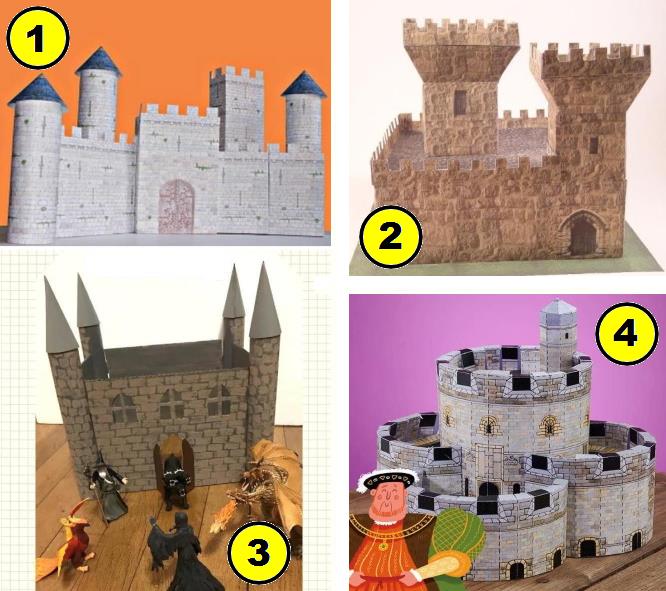
More Paper Models of Medieval Castles related posts:


Friday, December 1, 2023

Tetris Party Deluxe Miniature Diorama Papercraft - by Paper Foldabels

Created by designer Bryan, from Paper Foldables website, here is a "promotional Paper Foldable advertising Tetris Party Deluxe videogame for Tetris Online, Inc. The long piece actually slides down to make a TETRIS!" 

Tetris is one of the most famous and iconic puzzle games in the world of video games. 

It was created by the Russian programmer Alexey Pajitnov in 1984 while working at the Dorodnitsyn Computing Centre of the Soviet Academy of Sciences. 

The game involves pieces of different shapes called "tetrominoes" that fall from the top of the screen, and the player needs to rotate and move these pieces to fit them together and form complete lines. 

When a line is filled, it disappears, making room for more pieces. The goal is to prevent the pieces from reaching the top of the screen. 

Tetris quickly gained popularity on Soviet computers and was later distributed worldwide, gaining prominence when it was released for the Game Boy in 1989. 

Its simple yet challenging gameplay and captivating soundtrack contributed to its longevity and recognition as one of the most influential and beloved games in video game history. 

You'll find many other super original paper toys on Bryan's website, as can be seen in the third image of this post, all with the unmistakable Paper Foldables style. It's a true journey through pop culture from recent decades.

Criado pelo designer Bryan, do site Paper Foldables, eis aqui um "Paper Foldable promocional anunciando o jogo de vídeo Tetris Party Deluxe para a Tetris Online, Inc. A peça longa desliza de verdade para formar um TETRIS!" 

Tetris é um dos jogos de quebra-cabeça mais famosos e icônicos do mundo dos videogames. Foi criado pelo programador russo Alexey Pajitnov em 1984, enquanto trabalhava no Centro de Computação Dorodnitsyn da Academia de Ciências da União Soviética. 

O jogo consiste em peças de diferentes formas chamadas "tetraminós" que caem do topo da tela, e o jogador precisa girar e mover essas peças para encaixá-las e formar linhas completas. Quando uma linha é preenchida, ela desaparece, dando espaço para mais peças. 

O objetivo é evitar que as peças atinjam o topo da tela. O Tetris rapidamente se tornou popular nos computadores soviéticos e, posteriormente, foi distribuído em todo o mundo, ganhando destaque ao ser lançado para o Game Boy em 1989. 

Sua jogabilidade simples, mas desafiadora, e sua trilha sonora cativante contribuíram para sua longevidade e reconhecimento como um dos jogos mais influentes e queridos da história dos videogames. 

Você vai encontrar muitos outros paper toys super originais no site de Bryan, como pode ser visto na imagem logo abaixo, todos com o inconfundível estilo Paper Foldables. Um verdadeiro passeio pela cultura pop das últimas décadas.


Link:
Tetris.Party.Deluxe.Miniature.Diorama.Papercraft.by.Paper.Foldabels


More Paper Toys inspired by Videogames related posts:

Monday, August 14, 2023

The Dool House - A Russian Vintage Papercraft - by Z. L. Venediktova
via самое главное из детства

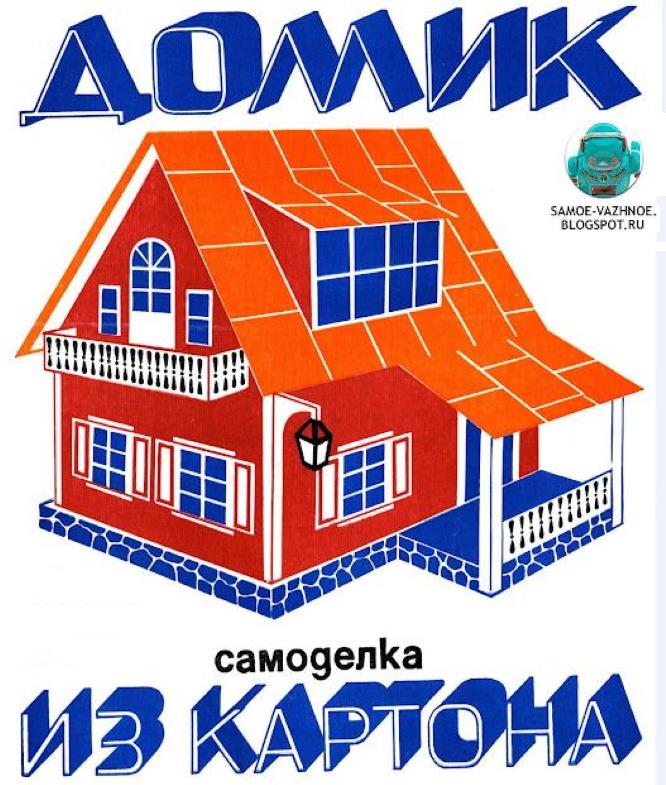
This old paper model of a dollhouse comes from Russia, or rather, from the former Soviet Union, as the original model was published in October 1975, as indicated on one of the model's sheets. On the same page, the name of the artist, Z. L. Venediktova, is provided, it's mentioned that this papercraft is recommended for children aged five to ten years and that the price was 50 Soviet rubles. 

The model was preserved and is now shared by a Russian website full of old papercrafts, many of them from the former Soviet Union. The name of the site is "Cамое Rлавное из детства" which translates as "The Most Important of Your Youth". The person responsible for the site is called "Мозг Робота", or "Robot Brain". 

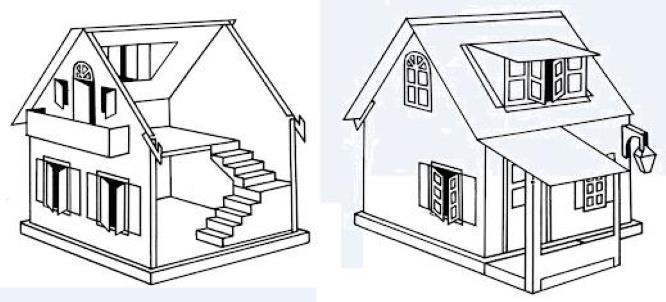
The entire model spans nine sheets, and the instructions are in Russian. There are only two illustrations of the assembled little house, so I suggest using an online translator on your smartphone to translate the text and,  even then, it might be complicated because the resolution of the templates is low, causing the letters to appear somewhat blurry. 

By observing the arrangement of the pieces on the sheets and the two images of the assembled house, I believe it's possible to construct the model with relatively little difficulty, even without clear instructions.

Este antigo modelo de papel de uma casa de bonecas vem lá da Rússia, ou melhor, da extinta União Soviética, já que o modelo original foi publicado em outubro de 1975, conforme cosnta em uma das folhas do modelo. Na mesma página é informado o nome do artista, Z. L. Venediktova, que este papercraft é recomendável para crianças de cinco a dez anos e que o preço era de 50 rublos soviéticos. 

O modelo foi preservado e é agora compartilhado por um website russo cheio de papercrafts antigos, muitos deles da antiga União Soviética. O nome do site é "Cамое Rлавное из детства" cuja tradução é "O Mais Importante de Sua Juventude". O responsável pelo site se chama "Мозг Робота", ou "Robô Cérebro". 

O modelo todo ocupa nove folhas e as instruções são em russo. Há apenas duas ilustrações da casinha montada, então sugiro que se use um tradutor online em seu smartphone para traduzir o texto, e mesmo assim será complicado já que a resolução dos templates é baixa, deixando as letras um pouco borradas. 

Observando a disposição das peças nas folhas e as duas imagens da casa montada, penso que seja possível construir o modelo sem muita dificuldade, mesmo sem instruções claras.


Link:
Dool House.Russian.Vintage.Papercraft.by.Z.L.Venediktova.via.самое.главное.из.детства


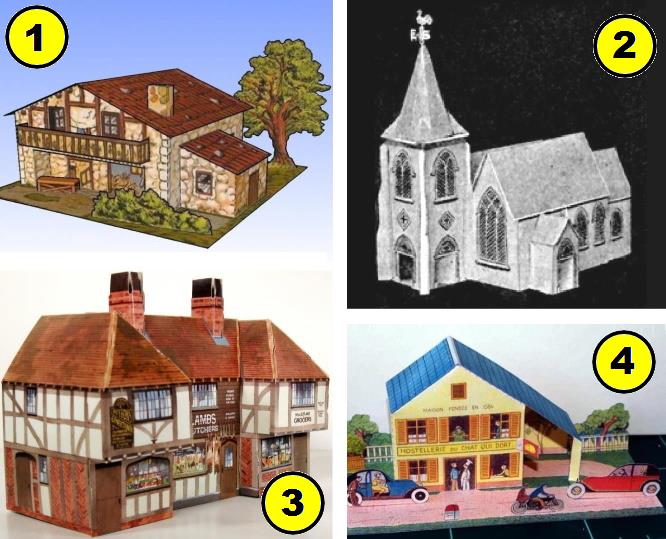
More Vintage Architectural Paper Models related posts: