Showing posts with label 1/48 scale. Show all posts

Monday, October 26, 2026

The Ephemeral Museum - An Amazing Illuminated Haunted House Papercraft - Built by Mike Schmidt

Haunted house free printable papercraft by Clever Models, featuring weathered wooden walls, a dead tree, pumpkins, and a stone pathway - via Papermau blog

This atmospheric haunted house papercraft was created by Clever Models in 2015, in O scale (approximately 1/48), and occupies seven printed sheets. The model represents an old, abandoned wooden house, with broken windows, damaged walls, missing boards, and a roof that has clearly seen better days. The textures are very realistic, and even without any additional details, the house already has everything it needs to look like a place nobody would want to visit after dark.

A few days ago, modeler Mike Schmidt kindly invited me to visit his photo album, where he shared his own version of this haunted house. I was very happy to receive his invitation and even happier when I saw the photographs. Mike did a really nice job, not only assembling the house but also creating a small diorama around it, with a dead tree, pumpkins, dry grass, a stone pathway, and other little details that make the scene much more interesting.

One detail that caught my attention was the mysterious figure behind the broken glass of the front door. With its white hood and reddish eyes, it reminded me a little of Spider-Gwen, also known as Ghost-Spider, from the Spider-Man universe. I don't know if that was Mike's intention, but it certainly fits the Halloween atmosphere.

What I liked most, however, was the way Mike used LED lights to give the house a completely different appearance at night. Greenish-yellow light comes through the broken windows, gaps in the wooden walls, and openings in the roof, while red and orange lights illuminate parts of the ground and vegetation outside. The effect is really nice, especially when you compare the daytime and nighttime photographs. With the lights off, it looks like an abandoned house. With the lights on, it looks like something strange might be happening inside.

In fact, the lighting reminded me of some scenes from The X-Files, which recently became available on Amazon Prime Video here in Brazil. I've been rewatching the series lately, and it's been a nice nostalgic trip. Looking at Mike's little haunted house, I can almost imagine Mulder and Scully showing up to investigate something mysterious going on inside.

I would like to thank Mike Schmidt for kindly inviting me to see his photographs and for allowing me to share his work here on Papermau. I really enjoyed seeing what he did with this model, especially the lighting and all the small details he added. It's always nice to see how different modelers bring their own ideas to a papercraft, and Mike's haunted house is a good example of that. Thanks again, Mike, for sharing your work!

Side view of Mike Schmidt's haunted house papercraft, showing weathered wooden walls, broken windows, boarded openings, and realistic aged textures.
Rear view of the haunted house papercraft built by Mike Schmidt, featuring a damaged roof, boarded wooden walls, a tall chimney, and dry grass around the diorama.

Este atmosférico papercraft de uma casa assombrada foi criado pela Clever Models em 2015, na escala O (aproximadamente 1/48), e ocupa sete folhas impressas. O modelo representa uma velha casa de madeira abandonada, com janelas quebradas, paredes danificadas, tábuas faltando e um telhado que já conheceu dias melhores. As texturas são bastante realistas e, mesmo sem nenhum detalhe adicional, a casa já tem tudo para parecer um lugar que ninguém gostaria de visitar depois que escurece.

Há alguns dias, o modelista Mike Schmidt gentilmente me convidou para conhecer seu álbum de fotografias, onde compartilhou sua própria versão desta casa assombrada. Fiquei muito feliz com o convite e mais feliz ainda quando vi as fotos. Mike fez um trabalho muito caprichado, não apenas na montagem da casa, mas também na criação de um pequeno diorama ao redor dela, com uma árvore seca, abóboras, vegetação ressecada, um caminho de pedras e outros pequenos detalhes que tornam a cena muito mais interessante.

Um detalhe que me chamou a atenção foi a figura misteriosa atrás do vidro quebrado da porta da frente. Com seu capuz branco e olhos avermelhados, ela me lembrou um pouco a Spider-Gwen, também conhecida como Ghost-Spider, do universo do Homem-Aranha. Não sei se essa foi a intenção de Mike, mas a figura certamente combina com o clima de Halloween.

Mas o que mais gostei foi a maneira como Mike utilizou luzes de LED para dar à casa uma aparência completamente diferente durante a noite. Uma luz esverdeada e amarelada escapa pelas janelas quebradas, pelas frestas das paredes de madeira e pelas aberturas no telhado, enquanto luzes vermelhas e alaranjadas iluminam partes do terreno e da vegetação ao redor. O efeito ficou muito legal, principalmente quando comparamos as fotografias tiradas com e sem iluminação. Com as luzes apagadas, parece apenas uma casa abandonada. Com as luzes acesas, dá a impressão de que alguma coisa estranha está acontecendo lá dentro.

Aliás, essa iluminação me fez lembrar de algumas cenas de Arquivo X, que recentemente entrou no catálogo do Amazon Prime Video aqui no Brasil. Tenho reassistido à série ultimamente e está sendo uma boa viagem nostálgica. Olhando para essa pequena casa assombrada de Mike, quase consigo imaginar Mulder e Scully chegando para investigar alguma coisa misteriosa acontecendo lá dentro.

Quero agradecer a Mike Schmidt pela gentileza de me convidar para conhecer suas fotografias e por permitir que eu compartilhasse seu trabalho aqui no Papermau. Gostei muito de ver o que ele fez com esse modelo, especialmente a iluminação e todos os pequenos detalhes que acrescentou. É sempre legal ver como diferentes modelistas colocam suas próprias ideias em um modelo de papel, e a casa assombrada de Mike é um bom exemplo disso. Mais uma vez, obrigado, Mike, por compartilhar seu trabalho!

Um pouco mais abaixo, você encontrará o link para o álbum de fotografias de Mike Schmidt, onde poderá ver mais imagens de sua casa assombrada, e também o link para o site da Clever Models, onde as sete folhas do modelo original estão disponíveis para download gratuito.

Mike Schmidt's haunted house papercraft illuminated at night with eerie green LED lights glowing through the windows and red lights highlighting the surrounding vegetation.
Two nighttime views of Mike Schmidt's illuminated haunted house diorama, showing green light through the broken walls and windows, a dead tree, and glowing red vegetation.

Below, you will find the link to Mike Schmidt's photo album, where you can see more pictures of his haunted house, and the link to the Clever Models website, where the original seven sheets are available for free download:

Link to photo album: Mike Schmidt's Haunted House Papercraft Photo Album

Link to download the model: Haunted House Free Printable Papercraft in 1/48 Scale – by Clever Models

Papermau papercraft post divider

Below, four more Halloween-themed papercrafts previously featured here at The Ephemeral Museum.

Four Halloween papercraft models from The Ephemeral Museum via Papermau: a haunted Victorian house, a colorful Halloween pop-up card, a ghost ship, and two spooky buildings assembled by talented modelers.

01 - The Ephemeral Museum - The Ghost House - by Ravensblight - Assembled by Papermau

02 - The Ephemeral Museum - Haunted House Pop-Up Card - Assembled by Day Caro

03 - The Ephemeral Museum - The Ghost Ship - by Ravensblight - Assembled by SCEtoAUX

04 - The Ephemeral Museum - Psychoscareapy & ScreamHouse Paper Models - Assembled by A. Akselrud

Papermau papercraft post divider

About the Ephemeral Museum:

I have been involved in paper modeling since 2005, although I had my first contact with paper models back in my childhood in the 1970s, through magazines that were sold sporadically at newsstands. I remember publications with houses to build and dioramas or playsets of airports, western forts, nativity scenes and similar themes.

With the advent of the internet, what happened was simply a revival of the papercraft hobby for me and for many other people of my generation. Today I am opening a new section here on the blog, The Ephemeral Museum, which is a place where I will show some of the models I have built over all these years.

I would also like this to be a space where fellow modelers can show their work, so if anyone wants to participate in this museum, just send photos of your work and a few words, if you like, to the email below:

mautherous@gmail.com

All submitted works will be published, without exceptions.

Eu estou no papelmodelismo desde 2005, embora já tivesse tido contato com modelos de papel na minha infância, nos anos 1970, por meio de revistas que eram vendidas esporadicamente em bancas de jornal. Lembro de publicações com casas para montar e dioramas ou playsets de aeroportos, fortes de velho oeste, presépios e temas semelhantes.

Com o advento da internet, o que houve foi simplesmente um renascimento do hobby do papelmodelismo para mim e para muitas outras pessoas da minha geração. Hoje eu estou abrindo uma nova seção aqui no blog, o The Ephemeral Museum, que é um espaço onde irei mostrar alguns dos modelos que construí ao longo de todos esses anos.

Também gostaria que este fosse um espaço onde outros modelistas pudessem mostrar seus trabalhos, sendo assim, se alguém quiser participar deste museu, basta enviar fotos do seu trabalho e algumas palavras, se quiser, para o e-mail abaixo:

mautherous@gmail.com

Todos os trabalhos enviados serão publicados, sem exceções.

Papermau papercraft post divider


Papermau papercraft post divider

Wednesday, September 30, 2026

Japanese Type 1 Ho-Ni I Self-Propelled Gun Papercraft In 1/48 Scale
by Hakoko

Japanese Type 1 Ho-Ni I self-propelled gun detailed 1/48 scale papercraft by Hakoko from Box Studio

Created by talented Japanese designer Hakoko, from Box Studio, this is a truly impressive paper model of the Type 1 Ho-Ni I, or 一式砲戦車 ホニI, a Japanese self-propelled gun used during World War II.

The model is in 1/48 scale and, once assembled, measures approximately 12.2 cm long, 4.7 cm wide and 5.3 cm high. The templates consist of four pages of parts, plus four additional pages intended for printing on the reverse side. The author also provides a separate assembly manual and a diagram showing the fold lines.

As we have already seen in other works by Hakoko featured here on Papermau, the level of finish is exceptional. Looking at the photos, it is easy to forget for a moment that we are looking at a model made entirely of paper. The result looks very much like a carefully assembled and painted plastic kit, especially because of the textures, realistic weathering effects, and the detailed wheels, suspension and tracks.

This is not a model for beginners. There are many small parts, especially around the running gear and gun, but the construction has been very well planned. In his building diary, Hakoko shows the internal structure of the hull, the application of the outer covering, the assembly of the fighting compartment and gun, and finally the complex suspension and track system. Interestingly, he mentions that he considerably simplified the interior area around the driver's position.

The real vehicle on which this papercraft is based also has an interesting history. The Type 1 Ho-Ni I was developed to provide Imperial Japanese Army armored divisions with a more powerful mobile weapon. Instead of designing an entirely new vehicle, Japanese engineers used the chassis and engine of the well-known Type 97 Chi-Ha medium tank and replaced its turret with a 75 mm Type 90 field gun mounted behind an open fighting compartment.

One interesting fact is precisely this origin: beneath its completely different appearance, much of the Ho-Ni I was essentially still a Type 97 Chi-Ha.

Another interesting detail is that its role was not simply to hunt enemy tanks. The Ho-Ni I was also conceived as self-propelled artillery to accompany armored units, and its gun could be used against targets at considerable distances. Its open fighting compartment, however, left the crew exposed, and the vehicle did not carry a defensive machine gun, a serious disadvantage in close combat.

Finally, the Ho-Ni I was a rare machine. Only about 26 examples of this first version were produced in 1942. Some were sent to the Philippines and took part in the Battle of Luzon in 1945, while many vehicles of the Ho-Ni family remained in Japan to defend the home islands against a possible Allied invasion that never took place.

Hakoko provides the templates, assembly manual and fold-line diagram for free at Box Studio. For anyone interested in Japanese military vehicles and looking for a more detailed project, this is one of those papercrafts that shows just how far you can go with nothing more than paper, patience and a good printer.

Side view of the Japanese Type 1 Ho-Ni I self-propelled gun 1/48 scale papercraft by Hakoko, showing the detailed tracks and suspension

Criado pelo talentoso designer japonês Hakoko, do site Box Studio, este é um modelo em papel realmente impressionante do Type 1 Ho-Ni I, ou 一式砲戦車 ホニI, um canhão autopropulsado japonês utilizado durante a Segunda Guerra Mundial.

O modelo está na escala 1/48 e, depois de montado, mede aproximadamente 12,2 cm de comprimento, 4,7 cm de largura e 5,3 cm de altura. Os templates ocupam quatro folhas de peças, com outras quatro páginas destinadas à impressão no verso, e o autor também disponibiliza separadamente um manual de montagem e um diagrama com as linhas de dobra.

Como já vimos em outros trabalhos de Hakoko publicados aqui no Papermau, o nível de acabamento é excepcional. Visto nas fotografias, é fácil esquecer por alguns instantes que estamos olhando para um modelo feito inteiramente de papel. O resultado lembra muito um kit plástico cuidadosamente montado e pintado, principalmente pelas texturas, pelos efeitos de desgaste e envelhecimento, e pelo detalhamento das rodas, suspensão e esteiras.

Não é um modelo para iniciantes. Há muitas peças pequenas, especialmente no conjunto de rodagem e no canhão, mas a construção foi muito bem planejada. No diário de montagem, Hakoko mostra a estrutura interna do casco, a aplicação do revestimento externo, a montagem da área de combate, do canhão e finalmente do complexo conjunto de suspensão e esteiras. Curiosamente, ele comenta que simplificou bastante a região interna próxima ao posto do motorista.

O veículo real no qual este papercraft é baseado também tem uma história interessante. O Type 1 Ho-Ni I surgiu da necessidade do Exército Imperial Japonês de fornecer às suas divisões blindadas uma arma móvel mais poderosa. Em vez de desenvolver um veículo totalmente novo, os engenheiros aproveitaram o chassi e o motor do conhecido tanque médio Type 97 Chi-Ha e substituíram sua torre por um canhão de campanha Type 90 de 75 mm instalado em um compartimento de combate aberto.

Uma primeira curiosidade é justamente essa origem: por baixo da aparência completamente diferente, grande parte do Ho-Ni I continuava sendo essencialmente um Type 97 Chi-Ha.

Outra é que sua função não era simplesmente caçar tanques. O Ho-Ni I foi concebido também como artilharia autopropulsada para acompanhar unidades blindadas, e seu canhão podia ser utilizado contra alvos a grandes distâncias. A configuração aberta, entretanto, deixava a tripulação bastante exposta e o veículo sequer possuía uma metralhadora defensiva, uma séria desvantagem em combate próximo.

Por fim, o Ho-Ni I foi uma máquina rara. Apenas cerca de 26 exemplares dessa primeira versão foram produzidos em 1942. Alguns chegaram às Filipinas e participaram da Batalha de Luzon em 1945, enquanto muitos veículos da família Ho-Ni permaneceram no Japão para a defesa das ilhas contra uma possível invasão aliada que nunca aconteceu.

Hakoko disponibiliza gratuitamente os templates, o manual de montagem e o diagrama das linhas de dobra no Box Studio. Para quem gosta de veículos militares japoneses e procura um projeto mais detalhado, este é daqueles papercrafts que mostram até onde se pode chegar trabalhando apenas com papel, paciência e uma boa impressora.

Front and side views of the Japanese Type 1 Ho-Ni I 1/48 scale papercraft by Hakoko, showing the open fighting compartment, gun and detailed tracks
Miniature preview of the Type 1 Ho-Ni I papercraft templates and assembly instructions by Hakoko, shown for visualization purposes only

Build this highly detailed Type 1 Ho-Ni I in 1/48 scale using the free templates available at the link below:

Japanese Type 1 Ho-Ni I Self-Propelled Gun Papercraft In 1/48 Scale - by Hakoko

Papermau papercraft post divider

If you enjoyed this detailed Type 1 Ho-Ni I, take a look below at four more impressive military vehicle papercrafts:

Four detailed World War II tank and armored vehicle free papercrafts in scale, featuring the 7TP, Nashorn, M3A1 and LVT(A)-1 via Papermau

01: Polish 7TP dw Twin-Turret Light Tank Paper Model In 1/48 Scale - by Hakoko

02: Heavy Tank Destroyer Nashorn Paper Model In 1/48 Scale - by Hakoko

03: WW2`s Light Tank M3A1 Paper Model In 1/72 Scale - by Mr. Cube

04: LVT(A)-1 708th Amphibian Tank Battalion Paper Model In 1/72 Scale - by Paper Diorama

Papermau papercraft post divider


Papermau papercraft post divider

Sunday, September 14, 2025

Free Printable Pilot Papercrafts In Multiple Scales - by Christoph Stahl

The Stahlhart Papercraft website offers a series of pilot paper models (Pilot figures) designed in several scales: 1/60, 1/48 and 1/32. 

These models allow the modeler to add characters in a compatible scale to their dioramas, aircraft kits, military vehicles or war scenarios, giving more realism and visual depth to the compositions. 

These papercrafts are useful because they make it possible to represent people at a much lower cost and complexity compared to plastic or resin figures. 

They allow customization and adaptation to the modeler’s style, help develop precise assembly skills and are light and easy to transport or store. For this reason, they are ideal for those who like to display their works or take them to conventions. 

The author of these models is Christoph Stahl, born in Marburg, Germany, in 1975. Since childhood, he has been involved with drawing and papercrafts. 

He values the balance between simplicity for assembly and aesthetic complexity, so that the models are easy to build and at the same time have a pleasing appearance. 

Stahl also pays attention to scale and offers versions of the same model in different sizes, making it easier to adapt them to each modeler’s collection. 

These “pilot” models are a good addition for those who build paper or plastic airplanes, military vehicles, urban or historical dioramas, simulating the human presence in the scenes. 

Even for those who do not intend to show the pilots up close, they help to provide scale and context to larger models.

O site Stahlhart Papercraft oferece uma série de modelos de papel de pilotos (Pilot figures) projetados para várias escalas: 1/60, 1/48 e 1/32. 

Esses modelos permitem que o modelista acrescente personagens em escala compatível aos seus dioramas, kits de aviões, veículos militares ou cenários de guerra, dando mais realismo e profundidade visual às composições. 

Os papercrafts são úteis porque possibilitam representar pessoas com custo e complexidade muito menores do que figuras de plástico ou resina. Eles permitem personalização e adaptação ao estilo do modelista, ajudam no desenvolvimento de habilidades de montagem precisa e são leves e fáceis de transportar ou armazenar. Dessa forma, tornam-se ideais para quem gosta de exibir trabalhos ou levá-los para convenções. 

O autor desses modelos é Christoph Stahl, nascido em Marburg, Alemanha, em 1975. Desde criança, esteve envolvido com desenho e papercrafts. 

Ele valoriza o equilíbrio entre simplicidade para montagem e complexidade estética, de modo que os modelos sejam fáceis de montar e, ao mesmo tempo, apresentem aparência agradável. 

Stahl também se preocupa com a escala e oferece versões do mesmo modelo em diferentes tamanhos, facilitando a adaptação ao conjunto de cada modelista. 

Esses modelos do tipo “pilot” são uma boa adição para quem monta aviões de papel ou plástico, veículos militares, dioramas urbanos ou históricos, simulando a presença humana nos cenários. 

Mesmo para quem não pretende mostrar os pilotos de perto, eles ajudam a dar escala e contexto aos modelos maiores.


Link:
Free.Printable.Pilot.Papercrafts.In.Multiple.Scales.by.Christoph.Stahl


More Paper Models for Dioramas, RPG and Wargames related posts:


Friday, July 18, 2025

Apollo Lunar Module Paper Model In 1/48 Scale - by U-Don Factory

The Apollo Lunar Module (LM), in 1/48 scale, created by U-Don Factory, is a true papercraft masterpiece that takes us straight to the heart of the Apollo missions. 

The thirteen-page PDF unfolds an intricate interplay of forms, the delicate legs that supported the landing in 1969, the tetrahedral body filled with fine details, and even the classic parabolic antenna, all reproduced with clean, realistic design and impressive fidelity to the original. 

Cutting the small pieces and assembling them requires patience and care, especially in the tubular areas of the propulsion system and the landing pads, which demand a delicate touch to ensure the structure stays firm without warping. 

U-Don doesn’t mention it, but I believe that using thin wire can help greatly when constructing the module’s “legs,” adding both stability and realism to the final result. 

As can be seen in the images of this post, the finished model is a perfect miniature reproduction of the Apollo Lunar Module, a true miracle of space engineering, developed at a time when even the most powerful computers had less processing power than today’s basic smartphones. 

Released for free and for non-commercial use, this model is yet another testament to U-Don’s talent: a Japanese designer who transforms engineering icons into refined paper models for enthusiasts.

In this particular project, he reaches a new technical level by recreating, in paper and with great detail, one of humankind’s greatest achievements in space exploration. 

If you’re planning to use this model for a school project, or just want to impress your friends and guests with something that truly has a story, here are three lesser-known facts about the Apollo Lunar Module: 

Although it looks sturdy and emits smoke during landing, the LM was designed to operate solely in the vacuum of space, its strange, angular shapes would never withstand the resistance of Earth’s atmosphere. This means it would be completely useless here on Earth. 

This detail gives the module an almost alien look, making it perfect for a cinematic papercraft display. 

The LM played an unexpected role as a lifeboat in the Apollo 13 mission. After the explosion in the service module, the astronauts used the LM as a kind of “space canoe,” relying on its fuel and life-support systems to survive the journey back to Earth.

Few people know that the LM’s descent engine was remotely controlled and throttleable, capable of adjusting its thrust from 10% to 60% during the lunar landing. This allowed astronauts to fine-tune their descent based on the Moon’s actual surface conditions, a vital feature to avoid a crash. 

In U-Don’s model, this technical nuance can be seen in the tiny engine nozzles, yet another example of his meticulous attention to detail. 

For anyone eager to build the LM in scale, the file includes clear instructions, with high-resolution photos and a layout that guides the builder step-by-step without surprises. 

The model demands dedication, but it will reward every hour invested with a piece worthy of any museum, or of a crewed mission right there on your workbench. 

U-Don Factory is a Japanese paper artist known for his highly technical papercraft models of submarines, spacecraft, and military vehicles. 

His projects, all free for personal use, have become a reference point for paper modelers and collectors worldwide, thanks to a rare combination of precision, passion, and generosity.

O Módulo Lunar Apollo (LM), na escala 1/48, criado por U‑Don Factory, é uma verdadeira obra de arte em papercraft que nos transporta diretamente ao coração das missões Apollo. 

As treze folhas em PDF revelam um intricado jogo de formas,  as pernas delicadas que sustentaram o pouso em 1969, o corpo tetraédrico repleto de detalhes minuciosos e até a clássica antena parabólica, tudo reproduzido com um design limpo, realista e impressionantemente fiel ao original. 

O corte das pequenas peças e a montagem exigem paciência e atenção, principalmente nas partes tubulares do sistema de propulsão e nos painéis de pouso, que demandam delicadeza para que a estrutura se mantenha firme sem empenar. 

U‑Don não menciona isso, mas acredito que o uso de arames finos pode ajudar bastante na construção das “pernas” da nave, dando mais estabilidade e realismo ao modelo. 

O resultado final, como se pode ver nas imagens deste post, é uma reprodução em miniatura perfeita do Módulo Lunar Apollo, um verdadeiro milagre da engenharia espacial, concebido numa época em que os computadores mais avançados tinham menos poder de processamento que um smartphone de entrada dos dias de hoje. 

Lançado gratuitamente e sem fins comerciais, esse modelo é mais uma prova do talento de U‑Don: um designer japonês que transforma ícones da engenharia em modelos refinados para entusiastas do papel. 

Neste projeto em especial, ele atinge um novo patamar técnico, ao reproduzir com riqueza de detalhes uma das maiores conquistas da humanidade na exploração do espaço. 

Se você pretende usar esse modelo em um trabalho escolar ou apenas quer impressionar amigos e visitantes com algo que realmente tem história, aqui vão três curiosidades pouco conhecidas sobre o Módulo Lunar Apollo: 

Apesar de parecer robusto e soltar fumaça no pouso, o LM foi projetado exclusivamente para operar no vácuo, suas formas estranhas jamais suportariam a resistência do ar da Terra. Isso significa que ele seria completamente inútil dentro da atmosfera terrestre. Esse detalhe confere ao módulo um visual quase alienígena, que combina perfeitamente com a estética de um papercraft espacial. 

O LM acabou desempenhando o improvável papel de bote salva‑vidas na missão Apollo 13. Após a explosão do módulo de serviço, os astronautas recorreram ao LM como uma “canoa espacial”, utilizando seu combustível e seus sistemas de suporte à vida para sobreviver durante o retorno à Terra. 

Pouca gente sabe, mas o motor de descida do LM era telecontrolado e ajustável, com potência variando entre 10% e 60% durante a aproximação final. Esse sistema permitia aos astronautas ajustarem a velocidade do pouso conforme a topografia lunar, algo essencial para evitar acidentes. 

No modelo de U‑Don, esse detalhe técnico pode ser percebido nos pequenos bicos do motor, mais um exemplo da atenção meticulosa aos detalhes. 

Para quem deseja montar o LM em escala, o arquivo inclui instruções claras, com fotos em alta resolução e uma diagramação que guia o montador passo a passo, sem sustos. 

O modelo exige dedicação, mas recompensará cada hora investida com uma peça digna de qualquer museu, ou de uma missão tripulada na sua bancada de trabalho. 

U‑Don Factory é um artista do papel que se destaca no Japão por seus modelos técnicos e meticulosos de submarinos e naves espaciais. 

Seus projetos, todos gratuitos para uso pessoal, se tornaram referência entre modelistas e colecionadores ao redor do mundo, graças à combinação rara de precisão, paixão e generosidade.


Link:
Apollo.Lunar.Module.Paper.Model.In.1/48.Scale.by.U.Don.Factory


More Space Exploration themed Paper Models related posts:


Wednesday, June 18, 2025

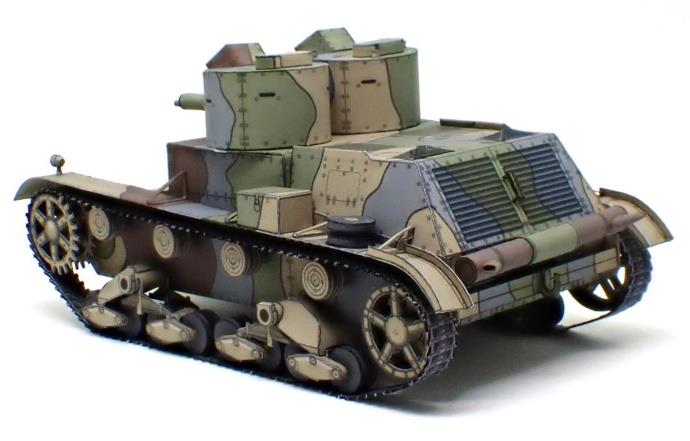
Polish 7TP dw Twin-Turret Light Tank Paper Model In 1/48 Scale
by Hakoko

Created by the talented Japanese designer Hakoko, from the Box Studio website, here is a beautifully detailed paper model of the Polish light tank 7TP dw, in 1/48 scale. This is the twin-turret version, a true gem for fans of historic armored vehicles. 

The complete model spans five printed sheets, three with the main parts and two with textures for the underside, which are optional for less demanding modelers. 

The kit also includes six pages of richly illustrated instructions, making the assembly process clear and accessible even for those with little experience. 

The 7TP dw is a true rarity among World War II armored vehicles. Its name comes from 7 Tonowy Polski (or "7-ton, Polish") and refers to the early variant with two independent turrets , known as dwuwieżowy. 

Based on the British Vickers 6-Ton tank, the 7TP featured several local improvements, including reinforced armor and an innovative diesel engine. 

Three curious facts add even more charm to this model: it was one of the first tanks in the world to use a diesel engine, something quite rare at the time; only 24 units of the twin-turret version were produced before switching to a more efficient single-turret design; and although it was technically superior to the German Panzer I and II, the 7TP had limited impact during the 1939 invasion of Poland, mostly due to its low production numbers and poor tactical deployment.

Criado pelo talentoso designer japonês Hakoko, do site Box Studio, aqui está uma detalhada versão em papel do tanque leve polonês 7TP dw, na escala 1/48. Esta é a variante com torre dupla, um verdadeiro achado para os fãs de blindados históricos. 

O modelo completo ocupa cinco folhas impressas, três com as peças principais e duas com texturas para partes inferiores, estas últimas opcionais para os modelistas menos exigentes. 

Acompanha ainda um conjunto com seis páginas de instruções ricamente ilustradas, que tornam a montagem clara e acessível, mesmo para quem não tem tanta experiência. 

O 7TP dw é uma raridade entre os veículos blindados da Segunda Guerra Mundial. Seu nome vem de 7 Tonowy Polski (ou “7 toneladas, polonês”) e representa a versão inicial, com duas torres independentes, chamada de dwuwieżowy. 

Inspirado no Vickers 6-Ton britânico, o 7TP foi aprimorado localmente com blindagem reforçada e um inovador motor a diesel. 

Três curiosidades dão ainda mais charme a esse modelo: foi um dos primeiros tanques do mundo a usar motor diesel, o que era incomum na época; apenas 24 unidades da versão com torres duplas foram fabricadas, antes de se adotar o modelo de torre única; e, apesar de ser tecnicamente superior aos Panzer I e II alemães, o 7TP teve impacto limitado durante a invasão da Polônia em 1939, por conta de sua produção reduzida e emprego tático desfavorável.


Link:
Polish.7TPdw.Twin.Turret.Light.Tank.Paper.Model.In.1/48.Scale.by.Hakoko


More Paper Models of Tanks related posts: